

Pastorals No. 1: Thanking Wyeth
Reflections on gratitude, Andrew Wyeth, and finding the pastoral in our modern lives.

I am writing to you today from Thanksgiving in Japan. The sun sits low in the sky, even at 10 a.m., and moisture hangs cold and heavy over the red and brown mountains. Though I usually spend my workdays running English activities at a local junior high school, today started a little differently. I spent my first class with one of my special needs students and our vice principal, out in the dirt of the school farm, harvesting thick, two-foot-long green onions. We piled a mountain of them into a crate and, with soil still under our fingernails and dusting our pants, hauled them to the cooking classrooms to clean, trim, and portion for sale. They’ll be available for 100 yen (about 65 cents) a bunch at the community center down the street.
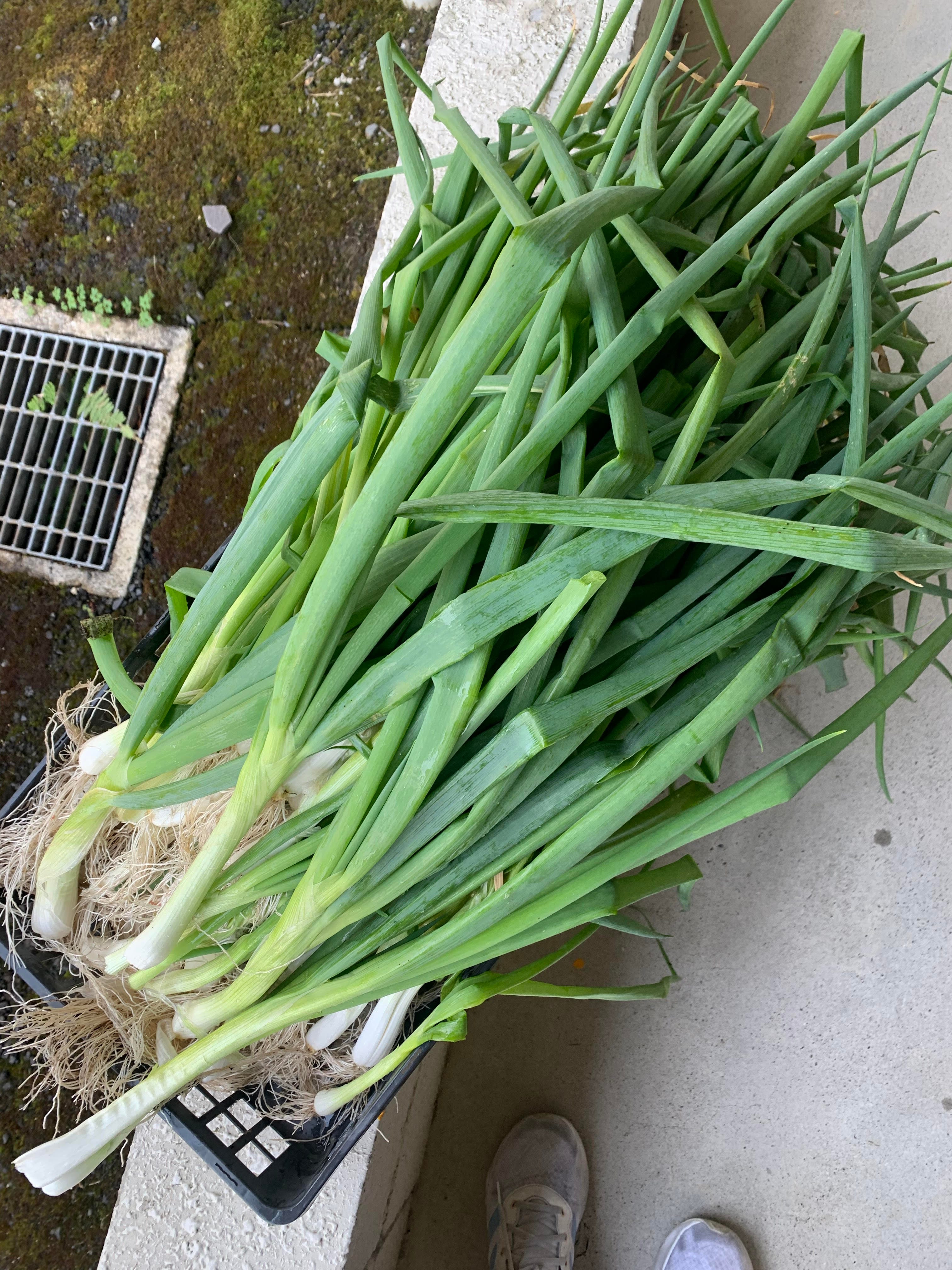
Is there any better way to start Thanksgiving than with your hands in the earth and a harvest shared among neighbors? As soon as we dropped off the crops, a host of older obaasans—fresh from a morning workout class—made a beeline for our bins. It feels immeasurably good to know that the onions from my school will end up on dinner tables across town tonight.
As I returned to my desk and regular work, I found myself thinking about Andrew Wyeth. Something about the quiet, the labor, the sense of tending a place brought me straight to his paintings. Not the idyllic pastoral of textbooks but a more intimate kind: rural life as it is actually lived. The cold light on fields and the stillness can feel both isolating and comforting. When I see the browning trees and earth, I sense that the land holds memory. Wyeth understood this version of the pastoral better than almost anyone.
And that brings me back to Thanksgiving. As many of you tuck into feasts this week and reflect on gratitude, I hope you’ll also consider the quiet earth beneath it all: the farms and fields, the cranberry bogs, the generations of people who coaxed food from long stretches of land and found meaning in doing so. Hands in the dirt, harvests shared, and communities fed are where the pastoral still lives, not as a beautiful fantasy but as a lived relationship between people and place.
The Pastoral Tradition
Before turning fully to Wyeth himself, it helps to look briefly at the pastoral tradition he sits beside. In literature and art, the pastoral began in ancient Greece with Theocritus and later Virgil, who imagined rural life as a space of simplicity, ease, and philosophical clarity. These shepherds and fields were never purely documentary; they were ideal landscapes constructed to contrast with the noise of urban and political life (Number Analytics). Much later, Renaissance and Romantic artists carried this forward, painting scenes of shepherds, gentle hills, and harmonious coexistence with nature. The pastoral became not just a genre but a cultural shorthand for an imagined calm (VeryImportantLot).
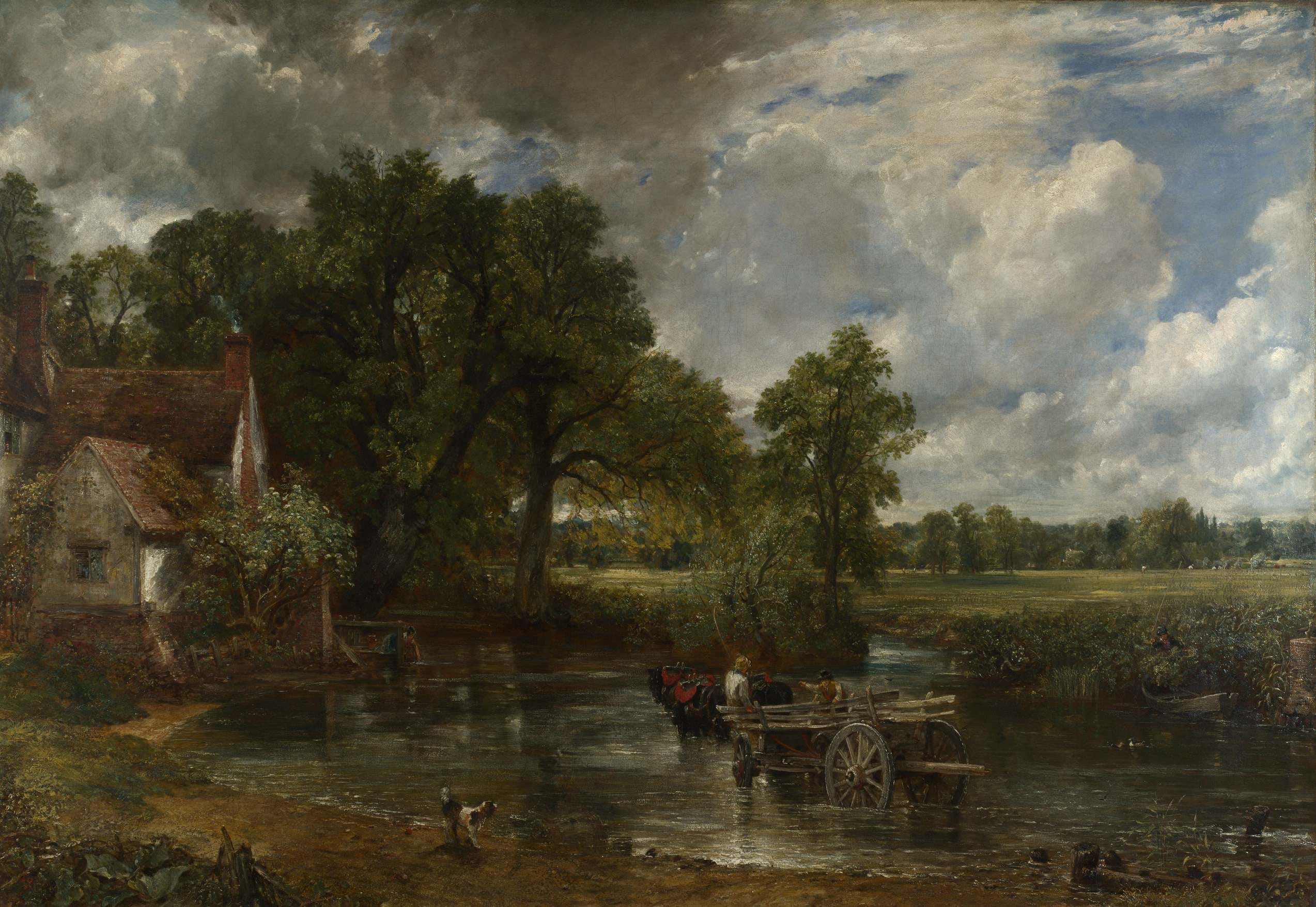
Andrew Wyeth rarely fits that mold. His landscapes and interiors are grounded not in idealization but in observation: the hard lines of winter grass, the worn steps of a farmhouse, the shadowed distances of Pennsylvania fields. His work reflects the rural world as it exists for the people who live within it — beautiful, yes, but tinged with solitude, labor, and the slow press of time. If the traditional pastoral offers escape from reality, Wyeth offers something more unusual and more moving: escape into reality (Andrew Wyeth).
This is why I find him such a compelling figure for a modern pastoral. His paintings acknowledge isolation, yet they also suggest a kind of inner steadiness. They offer a vision of rural life that isn’t sentimental but still deeply comforting. In an age of digital overstimulation, Wyeth’s restraint feels like its own balm. His muted palette and quiet compositions remind us that rural life is not always soft, yet it can be a place where attention deepens, and where solitude becomes a companion rather than a threat.
Pennsylvania Landscape
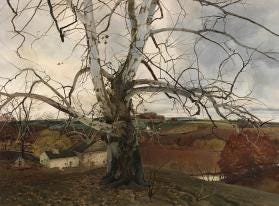
For a perfect illustration of Wyeth’s quiet, lived-in pastoral, I turn to his 1941 tempera painting, Pennsylvania Landscape. I first saw it at the Brandywine Museum in the Brandywine Valley, PA, on the very site of his studio—a relic of the past and testament to his genius. Wyeth described it as “the whole Pennsylvania landscape in one picture” (Brandywine), and I find that description entirely fitting. I see the care he put into mixing each color to reflect the late-autumn landscape perfectly. I feel the bite in the air as the breeze whistles through the bare branches of the buttonwood tree. As a viewer, I sense myself alone at the top of the hill, so close to home comforts, yet at peace just to look, unrushed.
Though not my original home, Pennsylvania is where I return for family gatherings, and where I’ve spent significant time as an adult. This painting captures the rural, melancholic beauty of the countryside. Though the 21st century has changed so much, this stretch of landscape remains essentially unchanged. In this, I find a sense of comfort: somewhere in the world, this old buttonwood tree still stands, homesteads still operate, and the chill of cloudy November days persists. As I woke on Thanksgiving today, far from home and my mother’s cooking, I looked at the wall in my bedroom, where a print of this painting hangs, and I felt quietly pacified, despite having no plane ticket home.
Roasted Chestnuts
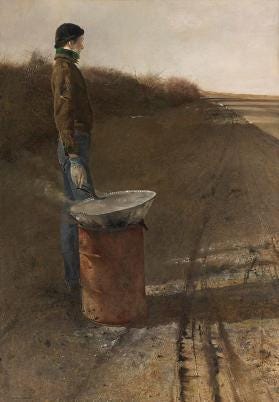
Another work that perfectly illustrates Wyeth’s pastoral is his 1956 painting, Roasted Chestnuts (Brandywine Museum). In the painting, the subject looks away from the viewer, absorbed in the moment. We are not invited into an idealized pastoral scene; instead, we enter the lived reality of the figure: the frigid air, the scent of chestnuts, the quiet intimacy of a simple winter ritual. The figure’s only distraction seems to be the view and occasional passersby, a rare pause in the rhythm of daily life. Mundane moments like this remind us how precious stillness can be. Oh, to have that moment of quiet away from screens, noise, and the endless distractions of the modern world.
I wonder if Wyeth could have imagined this effect when he painted this work, yet here we are, two or three generations later, drawn into the same scene. Art, long after its creation, speaks to viewers across time, offering a personal escape into a reality they long for, or even one they see regularly. In that space, the pastoral emerges as a tangible and restorative experience.
In Closing
As we wrap up this issue, I return to the quiet gratitude we can feel for our land, our lives, and our everyday moments. Wyeth saw the value in the mundane, and we should, too. Though time passes and the world changes, we can still find fleeting moments of the idyllic: a foggy autumn morning, the smell of onions on your hands after a day’s labor, or a piece of art that reminds you of home.
I wish you a very happy Thanksgiving! I’m genuinely grateful for each of you reading along. Thicket will be back in your inboxes soon as we continue exploring pastorals. I’d love to hear from you. Share a moment of quiet gratitude, a small scene that brought you peace, or simply something you’re thankful for this year. Take a moment today to notice the small, quiet wonders around you. They are the pastoral in your own life.
Endnotes
VeryImportantLot, “Pastoral — What, Where, When,” https://veryimportantlot.com/en/news/blog/pastoral--what-where-when
NumberAnalytics Blog. “Pastoral Tradition in Classical Literature.”
https://www.numberanalytics.com/blog/pastoral-tradition-classical-literatureEncyclopedia Britannica. “Andrew Wyeth.” https://www.britannica.com/biography/Andrew-Wyeth
Brandywine Museum of Art. “Pennsylvania Landscape.” Andrew Wyeth, 1942. Collection of the Brandywine Museum of Art. https://collections.brandywine.org/objects/4317/pennsylvania-landscape?ctx=7293d469-a23e-48a3-a454-0903a228728f&idx=49
Brandywine Museum of Art. “Roasted Chestnuts.” Andrew Wyeth, 1946. Collection of the Brandywine Museum of Art. https://collections.brandywine.org/objects/493/roasted-chestnuts?ctx=87ad7cb0-f490-426f-9d2f-4628e4d55bce&idx=18
Your writing on the pastoral was like a refreshing swim in a cold lake. As I’m not at home for Thanksgiving this year, I appreciate the reminder to disconnect from the ever convenient phone screen and engage with the present. Our little granddaughter is learning new words and starting to string them together. We shared her delight yesterday as she exclaimed over and over “Lina find bubbles!” As she eagerly showed bubble-shaped stickers to us all. Such joy from such a tiny thing as finding a favorite shape! Although we miss your physical presence among us this Thanksgiving, your writing reminds us you are never far, but just around the corner in our hearts.